

Views: 0 Author: Site Editor Publish Time: 2026-10-14 Origin: Site


Marine fleet operators face strict environmental regulations alongside the demand for vessel uptime. Authorities enforce rigorous discharge rules, notably the US EPA’s Vessel General Permit (VGP), penalizing marine pollution heavily. Vessel owners need absolute mechanical reliability to maintain profitable sailing schedules. Selecting the wrong stern tube sealing arrangement exposes operators to severe risks. An incorrect choice leads to catastrophic environmental fines and port detentions from oil leaks, or premature bearing wear and unplanned drydocking due to water system failures. Establishing an objective, engineering-first framework is necessary for evaluating oil lubricated vs water lubricated stern shaft seals. This evaluation focuses on long-term operational viability, regulatory compliance, and lifecycle maintenance realities. By analyzing hydrodynamic performance alongside environmental risk, engineering teams can specify the exact sealing configuration required for their specific vessel profiles and operating environments.
Regulatory Dominance: Water-lubricated systems offer absolute immunity to oil-discharge fines and eliminate the need for expensive Environmentally Acceptable Lubricants (EALs).
Mechanical Reliability: Oil-lubricated systems still provide superior hydrodynamic performance at low shaft speeds and high loads, though they carry inherent pollution risks and elastomer compatibility challenges.
Lifecycle Costs: While water-lubricated seals often have higher initial conversion costs for retrofits, their simplified aft-end maintenance frequently results in a lower 15-year lifecycle expense.
Vessel-Specific Selection: The optimal choice depends heavily on the vessel’s operating profile (blue water vs. brown water, draft variations, and typical shaft RPM).
The primary function of any stern tube seal is straightforward. It must prevent seawater ingress into the engine room while simultaneously preventing internal lubricants from escaping into the marine environment. Achieving this balance requires precise engineering tolerances and robust material selection. When evaluating marine stern shaft sealing systems, engineers establish strict baseline success metrics. Mean time between failures (MTBF) serves as the primary indicator of mechanical reliability. Operators expect seals to perform continuously without intervention between scheduled maintenance windows.
Predictable wear rates are equally important. Sudden or erratic degradation of sealing rings or bearing materials leads to emergency drydocking, which severely disrupts fleet operations. The chosen system must align perfectly with standard 5-year special survey drydocking schedules. Components should possess enough durability to survive 60 months of continuous operation under varying loads, drafts, and water temperatures without requiring mid-cycle replacement. During these drydock intervals, engineers typically execute a standard baseline inspection protocol:
Measure bearing clearance drops to quantify wear on the babbit or polymer material.
Inspect the shaft liner for grooving, pitting, or thermal cracking.
Verify the flexibility and structural integrity of all elastomer lip seals.
Test header tank alarms and flow monitoring sensors for accurate calibration.
Assess the condition of the rope guard and any installed net cutters.
Modern stern tube design is heavily dictated by international environmental law. The implementation of the Vessel General Permit (VGP) in the United States and stringent MARPOL regulations globally have fundamentally altered how marine engineers approach shaft lubrication. These frameworks mandate strict control over operational discharges, pushing the industry away from traditional mineral oils. For vessels utilizing oil-based systems, this creates a significant operational and financial burden. Operators must source, monitor, and meticulously document the use of Environmentally Acceptable Lubricants (EALs) to prove compliance during port state control inspections.
Beyond environmental compliance, structural and operational safety remains non-negotiable. Any implemented sealing system must carry major Classification Society type approvals. Certifications from bodies such as DNV, ABS, or Lloyd’s Register validate the engineering design against rigorous safety standards. These approvals ensure the vessel remains fully insurable and legally permitted to operate in international waters. Operating without these certifications immediately voids hull and machinery insurance policies.
An oil lubricated stern shaft seal relies on a highly controlled environment to maintain a continuous fluid film between moving parts. The architecture typically consists of forward and aft seal assemblies. The aft seal, exposed directly to seawater, usually features a multi-lip design utilizing advanced fluoroelastomers like FKM or Viton. These lip rings face in opposing directions. The aft-facing lips block water entry, while the forward-facing lips prevent oil escape.
Hydrodynamic lubrication is achieved through a gravity-fed header tank system located high in the engine room. This tank maintains a positive static pressure within the stern tube, ensuring the internal oil pressure slightly exceeds the external hydrostatic seawater pressure. As the shaft rotates, it drags the viscous oil into the microscopic wedge between the shaft liner and the bearing surface. This generates a pressurized hydrodynamic film that completely separates the metal components, virtually eliminating metal-to-metal contact during steady-state operation.
The primary engineering advantage of oil lubrication lies in its superior friction reduction. Oil possesses excellent viscosity characteristics that maintain a stable lubricating film even under extreme loads. This is particularly beneficial during start-stop operations and low-RPM maneuvering, where the shaft speed is insufficient to generate a thick hydrodynamic wedge. The oil film prevents boundary friction, protecting the bearing surface from premature scoring.
Furthermore, oil-lubricated systems offer exceptionally high load-bearing capacity. They can support massive propeller weights and tolerate minor shaft misalignments that naturally occur due to hull deflection in heavy seas. The damping effect of the viscous oil also helps absorb torsional vibrations. This contributes to smoother overall drivetrain performance and extends the lifespan of the reduction gear and main engine bearings.
Despite their mechanical superiority, oil-lubricated systems carry significant vulnerabilities. The most critical risk is external damage to the aft seal. Fishing nets, mooring lines, or submerged debris can easily become entangled around the rotating propeller shaft. This debris often migrates forward, cutting into the delicate elastomer lip seals. Once the seal integrity is breached, oil discharges directly into the ocean, resulting in immediate regulatory violations and severe financial penalties.
Maintenance and monitoring also present ongoing challenges. Engine room crews must constantly monitor header tank levels. A sudden drop indicates a leak, requiring immediate investigation. Additionally, the mandate to use EALs introduces chemical compatibility risks. Certain synthetic ester-based EALs are prone to hydrolysis when exposed to trace amounts of water. This chemical breakdown creates acidic byproducts that attack standard elastomer lip seals, causing them to harden, crack, and fail prematurely. Engineers must carefully match seal materials to specific lubricant chemistries to prevent rapid degradation.
Elastomer Material | Mineral Oil Compatibility | Synthetic Ester EAL Compatibility | Typical Application |
|---|---|---|---|
NBR (Nitrile) | Excellent | Poor (High risk of swelling) | Legacy systems, non-VGP waters |
FKM (Viton) | Excellent | Moderate (Risk of hydrolysis) | Standard modern oil seals |
Advanced FKM | Excellent | Excellent | High-performance EAL systems |
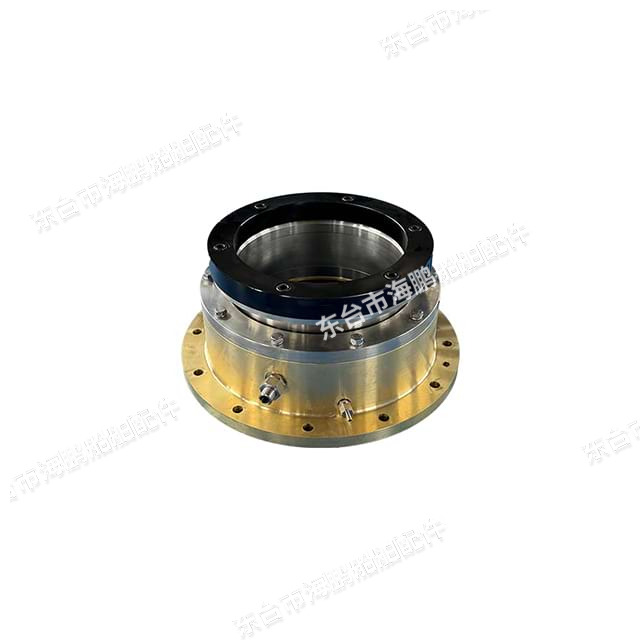
A water lubricated stern shaft seal operates on a fundamentally different principle, utilizing water's natural properties to cool and lubricate the shaft. These systems generally fall into two categories: open-loop and closed-loop configurations. Open-loop systems draw ambient seawater directly from the ocean, pump it through the stern tube to lubricate the bearings, and discharge it back into the sea. This configuration requires only a forward mechanical seal to keep water out of the engine room; the aft seal is entirely eliminated.
Closed-loop systems circulate treated freshwater internally within the stern tube. This requires both forward and aft seals but protects the internal components from corrosive seawater and abrasive marine environments. Both configurations rely on specialized polymer or elastomeric bearings designed to swell predictably and provide low-friction surfaces when wet. Because water lacks the corrosion-inhibiting properties of oil, the wetted areas of the shaft must be protected by highly corrosion-resistant liners, typically manufactured from bronze, Inconel, or advanced composite coatings.
The most profound advantage of an open-loop water-lubricated system is the complete elimination of the aft seal. By removing the aft seal assembly, engineers eradicate the most vulnerable component of the entire stern tube arrangement. There are no aft lip rings for fishing nets to destroy, drastically improving the mechanical resilience of the vessel's aft end in debris-heavy waters.
From a regulatory standpoint, water-lubricated systems provide absolute peace of mind. They guarantee zero oil pollution. Because there is no oil in the stern tube, there is zero risk of an accidental discharge. Fleet operators are completely insulated from VGP fines, port state control detentions related to stern tube leakage, and the negative public relations associated with marine pollution incidents. Furthermore, the operational budget is freed from the recurring, high costs of purchasing specialized EALs.
Water lubrication is not without its engineering challenges. Water has a significantly lower viscosity than oil, making it difficult to maintain a hydrodynamic film at low rotational speeds. During low-RPM maneuvering or engine startup, the system experiences boundary lubrication, leading to the stick-slip phenomenon. This causes vibration, acoustic noise, and accelerated wear on the polymer bearings until sufficient shaft speed is reached to generate a proper fluid wedge.
Another major vulnerability is the operating environment itself. In open-loop systems operating in shallow, coastal, or river environments, the seawater is often laden with abrasive suspended solids like sand and silt. If these abrasives enter the stern tube, they act like grinding paste between the rotating shaft liner and the stationary bearing. This causes rapid, aggressive wear to both the bearing material and the mechanical seal faces, potentially reducing the system's lifespan from years to mere months if proper filtration is not maintained.
When comparing these two technologies, fleet operators must look beyond the initial purchase price and conduct a comprehensive lifecycle analysis. Capital expenditure (CAPEX) for new installations or retrofits must be weighed against long-term operational expenditure (OPEX), which includes lubricant consumption, routine maintenance, and anticipated drydocking fees over the vessel's lifespan.
In a typical 15-year lifecycle scenario, oil-lubricated systems generally present a lower initial CAPEX. The hardware is standard, and installation procedures are universally understood by shipyards. However, the OPEX is substantially higher. Operators must continuously purchase expensive EALs, fund regular aft-seal replacements, and bear the financial risk of emergency drydocking if a seal is damaged by debris. Conversely, water-lubricated systems often require a higher initial investment, particularly due to the cost of specialized shaft liners and water conditioning units. Yet, their OPEX approaches zero regarding consumable lubricants, and the simplified aft-end design drastically reduces the frequency and cost of maintenance interventions over the 15-year period.
Evaluation Metric | Oil-Lubricated Systems | Water-Lubricated Systems (Open Loop) |
|---|---|---|
Initial CAPEX | Lower (Standard components) | Higher (Requires shaft cladding/liners) |
Consumable OPEX | High (Continuous EAL purchasing) | Near Zero (Uses ambient seawater) |
Pollution Risk | High (Vulnerable to aft seal damage) | Zero (No oil in the stern tube) |
Low-Speed Performance | Excellent (High viscosity film) | Moderate (Risk of stick-slip wear) |
Aft Seal Maintenance | High (Requires regular lip replacement) | None (Aft seal eliminated) |
For newbuild vessels, specifying either system is straightforward. However, retrofitting an existing oil-lubricated vessel to a water-lubricated system presents complex engineering challenges. The conversion process is highly invasive. The existing stern tube must often be modified or completely rebored to accommodate different bearing carriers. Shipyards must carefully machine the stern tube boss and pour specialized epoxy resins to secure the new housings.
The bare steel propeller shaft, previously protected by oil, must now be shielded from corrosive seawater. This requires the application of expensive fiberglass cladding or the shrink-fitting of bronze liners over the shaft's wetted length. Additionally, engineers must find adequate space within the cramped aft peak tank and engine room to install the necessary water quality packages, cyclonic separators, and flow monitoring equipment required to support the new water-based system.
Modern marine operations rely heavily on predictive maintenance to prevent catastrophic failures. The condition monitoring protocols for these two systems differ significantly. Oil-lubricated systems utilize routine oil sampling to detect water ingress, changes in viscosity, or the presence of wear metals. Bearing temperature sensors are also embedded directly into the babbit material to provide real-time alerts if friction increases dangerously.
Water-lubricated systems require a different approach. Because the lubricant is constantly flushed out in open-loop designs, fluid sampling is ineffective. Instead, monitoring relies on digital water flow meters to ensure adequate cooling volume reaches the bearings. Operators also utilize bearing wear-down gauges to physically measure the remaining thickness of the polymer bearing material. Both systems are increasingly integrated into vessel-wide digital networks, allowing shore-based engineering teams to track wear trends and schedule maintenance precisely when needed, rather than relying solely on calendar-based intervals.
Selecting the right vendor is as critical as selecting the right technology. A top-tier marine stern shaft seal manufacturer must demonstrate profound engineering capabilities rather than just mass-production capacity. Key criteria for vendor selection include in-house hydrodynamic testing facilities and deep material science expertise. The manufacturer must understand how different elastomer compounds react to various EAL chemistries, temperature fluctuations, and abrasive environments.
The ability to engineer custom marine shaft seals is essential, particularly for fleet operators managing older tonnage. Legacy vessels frequently feature non-standard shaft diameters, worn stern tube housings, or unique dimensional constraints that off-the-shelf commercial seals cannot accommodate. A capable manufacturer will deploy engineering teams to measure the specific vessel parameters and machine custom housing rings, adapter plates, and seal profiles to ensure a perfect, leak-free interface without requiring massive modifications to the ship's hull.
The maritime industry operates globally, and equipment failures do not respect geographical boundaries. A manufacturer's global service network is a vital component of the sourcing strategy. Fleet operators must evaluate the availability of OEM-certified service engineers at major global drydocking hubs, such as Singapore, Rotterdam, Shanghai, and Dubai. When a vessel enters drydock, delays waiting for technical supervision translate directly into lost revenue.
Supply chain resilience is equally critical. The manufacturer must guarantee the global availability and rapid deployment of stern tube seal spare parts. Replacement lip seals, mechanical face seals, and polymer bearing materials must be staged at strategic regional hubs to minimize vessel downtime during emergency repairs. Procurement teams should rigorously analyze the vendor's warranty structures, demanding specific performance guarantees related to elastomer wear life, bearing degradation rates, and overall MTBF.
To successfully deploy water-lubricated systems, engineers must actively mitigate the risk of abrasive wear. The most effective strategy is the installation of robust water quality packages. High-efficiency cyclonic separators should be integrated into the pumping line to utilize centrifugal force to strip sand, silt, and suspended abrasives from the seawater before it ever reaches the mechanical seal face or the polymer bearings.
Engineers must specify advanced polymer bearing materials engineered specifically for low friction. Modern composite bearings are formulated with internal solid lubricants that significantly reduce the coefficient of friction during boundary lubrication phases. This minimizes the stick-slip phenomenon and protects the shaft liner during low-speed maneuvering in port.
For vessels that require the heavy-duty performance of oil lubrication, mitigating external damage is the primary concern. Operators should mandate the installation of heavy-duty net cutters and robust rope guards directly forward of the propeller hub. These mechanical devices act as the first line of defense, shearing away fishing nets and mooring lines before they can migrate into the aft seal housing and destroy the elastomer lips.
To address the environmental risk, operators can implement advanced air-seal or void space systems. These hybrid configurations inject compressed air into a dedicated chamber between the seawater and the oil-filled stern tube. This creates a physical pneumatic barrier. Any oil that leaks past the primary lip seal is captured in the void space and drained inboard, rather than escaping into the ocean. This effectively neutralizes the pollution risk while retaining the hydrodynamic benefits of oil lubrication.
Regardless of the chosen technology, maritime operations require contingency plans for unexpected failures. Modern sealing systems must incorporate mechanisms for emergency operations and safe return to port. The integration of inflatable emergency seals, often called standstill seals, is highly recommended.
These pneumatic rings are installed forward of the primary seal assembly. In the event of a catastrophic primary seal failure, the shaft is stopped, and the emergency seal is inflated using the vessel's compressed air system. It clamps tightly around the shaft, completely stopping water ingress. This allows the engineering crew to safely open the primary seal housing, perform at-sea inspections, and execute temporary repairs without requiring an immediate, emergency tow to a drydock.
Conduct a fleet-wide lifecycle audit to quantify the current annual expenditure on EALs and aft-seal maintenance.
Consult with a specialized marine engineering firm to assess the physical feasibility of retrofitting existing vessels during their next special survey.
Request detailed, 15-year financial models from top-tier manufacturers to compare the exact operational expenditures of both systems based on specific vessel routing.
Evaluate local water conditions for all primary ports of call to determine the necessary filtration requirements for water-lubricated options.
A: Yes, but it requires significant engineering. The process involves modifying or replacing the bearing carrier and applying protective cladding or bronze liners to the bare steel shaft to prevent seawater corrosion. This invasive retrofit typically extends standard drydocking times and requires careful space planning for new water filtration units.
A: The primary components include the forward seal, the aft seal, the stern tube bearings, the stern tube housing itself, header tanks or water conditioning units, and the lubricating medium.
A: Component replacement is typically aligned with the vessel's 5-year special survey drydocking schedule. However, elastomer lip seals in oil systems may require immediate in-situ replacement if damaged by marine debris. Utilizing inflatable emergency seals can safely extend operational windows until proper repairs are feasible.
A: Yes, but they require robust water filtration systems. Operating in abrasive, brown-water environments necessitates high-efficiency cyclonic separators to remove suspended solids like sand and silt. Without adequate filtration, these abrasives will cause rapid, premature wear to the mechanical face seals and polymer bearings.
A: Legacy vessels often have non-standard shaft diameters due to previous machining, worn shaft liners, or unique stern tube dimensions. Off-the-shelf commercial seals cannot accommodate these irregularities without compromising the sealing interface. Custom-engineered seals ensure a precise, leak-free fit without requiring extensive hull modifications.
A: It is an advanced hybrid solution for oil-lubricated systems. It uses compressed air to create a physical pneumatic barrier between the seawater and the internal oil. Any leaking oil is captured in this space and drained inboard, virtually eliminating the risk of ocean pollution.
A: Yes. Certain EALs, particularly synthetic esters, are susceptible to hydrolysis when exposed to water. This chemical breakdown creates acids that degrade standard FKM/Viton elastomers, causing them to harden and crack. It is critical to verify chemical compatibility between your specific EAL and the manufacturer's seal rings.


