

Views: 0 Author: Site Editor Publish Time: 2026-10-28 Origin: Site


Premature material failure in stern tube bearings leads to catastrophic shaft scoring, unplanned dry-docking, and severe operational downtime. Engineering and procurement teams must balance load capacity, friction reduction, acoustic signatures, and environmental compliance when selecting bearing materials. Often, they rely on outdated heuristics rather than specific operational data. This guide provides an evidence-based technical evaluation of rubber vs nylon stern tube bearings. We detail performance trade-offs, implementation risks, and lifecycle economics to inform critical marine engineering decisions. You will learn how to match material properties to your vessel's operating profile, avoid costly clearance miscalculations, and ensure long-term mechanical reliability. By analyzing hydrodynamic film generation and material behavior under dynamic loads, we provide the exact parameters needed to optimize your propulsion system.
Application Specificity: A marine rubber stern tube bearing excels in vibration dampening, accommodating flexible mounting, and surviving abrasive environments, while high molecular weight nylon offers superior load-bearing capacity and lower calorific value (heat generation) at high speeds.
Clearance Sensitivities: Nylon and polymer materials require highly precise clearance calculations to account for thermal expansion and moisture absorption, whereas rubber offers more dimensional forgiveness.
Lifecycle Economics: Long-term operational expenditure is dictated less by raw material costs and more by marine bearing manufacturing quality, installation precision, relining capabilities, and alignment with the vessel’s specific operating profile.
Regulatory Impact: Both materials support water-lubricated systems, aiding compliance with stringent environmental regulations like the Vessel General Permit (VGP) and eliminating oil-to-sea interfaces.
Defining the baseline engineering requirements for stern tube bearings is a mandatory step before evaluating specific materials. The primary function of any stern tube bearing is to support the propeller shaft while minimizing friction and wear. This requires the reliable generation of a hydrodynamic fluid film. When the shaft rotates, it must draw water into the bearing clearance, creating a pressurized wedge of fluid that physically separates the metal shaft liner from the bearing surface. Materials must support this film generation across various speeds while resisting the stick-slip phenomenon at low RPMs during startup and shutdown sequences. The physics of this lubrication depend heavily on the shaft RPM, the bearing pressure, and the viscosity of the ambient water.
Operational demands extend far beyond simple rotation. Bearings must withstand severe dynamic loads caused by propeller weight, thrust forces, and rough sea conditions. Shaft support systems experience continuous radial and axial stresses. The chosen material must absorb these forces without deforming permanently or transferring excessive stress to the stern tube housing. Engineers must evaluate how a material behaves under edge loading, which occurs when shaft deflection concentrates extreme pressure on the aft end of the bearing. If a material cannot handle edge loading, it will wear unevenly, leading to rapid clearance degradation and eventual shaft vibration.
Acoustic performance and system flexibility represent growing priorities in modern naval architecture. Low-noise operation is essential for military submarines, naval surface combatants, and luxury passenger vessels. The bearing material directly influences the acoustic signature of the propulsion system by dampening or transmitting mechanical vibrations into the hull. Furthermore, the bearing system must accommodate movement within the stern tube and stuffing box assembly. Flexible mounting arrangements require materials that can tolerate slight misalignments without causing catastrophic shaft binding or excessive heat generation.
Environmental and regulatory compliance drives the industry-wide shift toward water-lubricated systems. Regulations like the Vessel General Permit (VGP) and the Polar Code strictly limit operational discharges in sensitive marine environments. Water-lubricated bearings eliminate the oil-to-sea interface entirely, removing the risk of pollution from stern tube seal leaks. Both rubber and nylon materials support these water-lubricated configurations, but they interact with the aqueous environment in fundamentally different ways, requiring distinct engineering approaches for installation and maintenance.
Rubber remains a foundational material in marine propulsion due to its unique elastomeric properties. Formulations vary significantly based on application requirements. Standard Nitrile Butadiene Rubber (NBR) provides excellent resistance to oil, fuel, and other chemicals, making it suitable for general marine use where stray hydrocarbons might enter the water supply. Specialized fluoric rubber, often referred to as Viton, offers superior high-temperature performance and broader chemical compatibility. Selecting the correct rubber compound ensures compatibility with corresponding stern tube seals, preventing premature degradation of the sealing lips and maintaining system integrity.
The performance advantages of a marine rubber stern tube bearing center on its elasticity. Rubber delivers superior vibration dampening and shock absorption capabilities. When a propeller strikes submerged debris or operates in heavy seas, the rubber lining absorbs the impact, protecting the rigid stern tube housing and the shaft itself. This flexibility proves highly advantageous when bearings are mounted using rubber hoses or integrated into flexible stuffing boxes. The material forgives minor shaft misalignments that would otherwise cause severe point-loading and rapid failure in rigid bearing systems.
Longitudinally grooved rubber designs play a critical role in bearing longevity. These grooves create dedicated channels for water flow, which serves two primary purposes. First, the water acts as a coolant, effectively flushing out endogenous heat generated by friction between the shaft and the bearing surface. Second, the elastomeric nature of rubber allows hard abrasive particles, such as sand and silt, to depress into the material. The rotation of the shaft then rolls these particles into the grooves, where the water flow flushes them out of the system. This mechanism prevents the abrasives from scoring the expensive metal shaft liner.
Maintenance strategies often favor rubber due to its relining capabilities. For military ships and heavy commercial vessels, replacing massive bearing shells requires significant logistical effort and dry-dock time. Rubber relining offers a highly effective maintenance advantage. Technicians can strip the worn rubber from existing propeller shaft bearing shells, sandblast the bronze or composite shell to bare metal, apply specialized bonding agents, and vulcanize a new rubber lining directly into the original hardware. This process restores the bearing to original specifications while utilizing the existing shell, significantly reducing material waste and procurement delays.
Despite these advantages, rubber possesses inherent limitations that engineers must account for. It exhibits a higher coefficient of friction at startup and low speeds compared to advanced polymers. This leads to a stick-slip phenomenon, causing low-frequency vibrations and accelerated wear during maneuvering operations. Additionally, rubber is highly susceptible to dry-running damage. If water flow is interrupted due to blocked intake valves or shallow water operation, the friction rapidly generates heat, causing the rubber to melt, char, and ultimately seize the shaft within minutes.
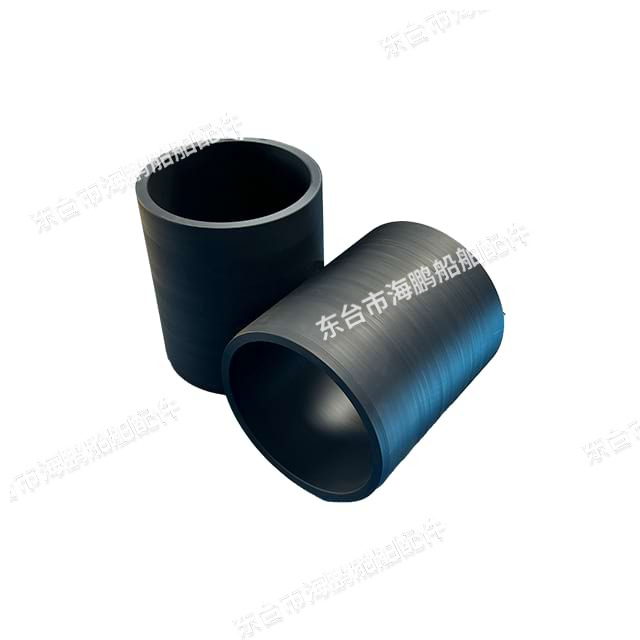
Advanced marine polymers have transformed shaft support engineering over the last two decades. High molecular weight nylon represents a class of engineered plastics designed specifically for heavy-duty mechanical applications. These materials possess a highly crystalline molecular structure, providing exceptional rigidity, tensile strength, and dimensional stability under load. Unlike elastomeric rubber, nylon acts as a hard bearing surface, relying on precise machining and continuous hydrodynamic lubrication to maintain performance and prevent shaft wear.
The primary performance advantage of high molecular weight nylon bearings is their exceptionally low coefficient of friction. This smooth surface promotes rapid hydrodynamic film generation at much lower shaft speeds than rubber. Lower friction directly results in a low calorific value, meaning the bearing generates significantly less endogenous heat during operation. This translates to lower noise levels, reduced wear on the shaft liner, and decreased overall energy consumption for the propulsion motor, making it highly efficient for long-haul commercial vessels.
Nylon also delivers high compressive strength and superior load-bearing capacity. It resists deformation under heavy radial loads far better than rubber. This structural rigidity allows naval architects to design smaller bearing footprints. Engineers can reduce the length-to-diameter (L/D) ratio of the bearing, saving weight and space within the stern tube while improving motor and shaft performance. The material supports heavier shafting systems without compressing or altering the running clearance, ensuring consistent alignment throughout the vessel's operational profile.
However, engineering teams must address the inherent limitations of nylon to prevent catastrophic failures. The most severe risks involve thermal expansion and hygroscopy. Nylon absorbs water from its environment. As water molecules penetrate the polymer matrix, they push the polymer chains apart, causing the material to swell volumetrically. Furthermore, nylon expands significantly when exposed to operational heat. If engineers do not calculate running clearances to accommodate both water absorption swelling and thermal expansion, the bearing will close in on the shaft. This leads to rapid heat generation, complete loss of clearance, and catastrophic shaft seizure.
Comparing these materials requires analyzing their behavior across specific operational metrics. Vessel operating profiles dictate which material characteristics provide the most value. A ferry operating in muddy, shallow rivers faces entirely different mechanical challenges than a deep-draft cargo ship crossing open oceans. Understanding these trade-offs ensures the selected material aligns with the vessel's actual operating conditions.
Performance Metric | Marine Rubber Bearings | High Molecular Weight Nylon |
|---|---|---|
Friction & Speed | Higher friction at low speeds (stick-slip). Requires higher RPM to establish a full fluid film. | Consistently low friction at all speeds. Rapid fluid film generation. Low calorific value. |
Load Capacity | Moderate. Compresses under heavy loads. Requires larger L/D ratios to distribute weight. | High. Excellent compressive strength. Allows smaller bearing footprints and handles heavy shafts. |
Thermal Expansion & Hygroscopy | Minimal dimensional changes from temperature fluctuations or water absorption. | High. Requires highly precise clearance calculations to account for heat and moisture swell. |
Abrasive Tolerance | Excellent. Embeds hard particles and flushes sand/silt through longitudinal grooves. | Poor. Hard particles can become trapped in the clearance, severely scoring the shaft liner. |
Vibration Dampening | Superior. Absorbs mechanical shock and forgives minor shaft misalignment dynamically. | Rigid. Transfers vibration directly to the housing; requires highly accurate shaft alignment. |
Dry Running Tolerance | Very low. Melts and chars rapidly if water flow is interrupted, leading to seizure. | Moderate. Can survive brief periods of dry running due to inherent self-lubricating properties. |
Hydrodynamic performance curves highlight the distinct differences in speed and friction between the two materials. Nylon maintains low friction and low heat generation at high RPMs, making it highly efficient for continuous blue-water cruising where the shaft spins at a constant rate for days or weeks. Rubber generates more drag until the shaft reaches sufficient speed to establish a full fluid wedge. For vessels that frequently stop, start, and maneuver at low speeds in harbors, nylon provides a smoother operational profile without the stick-slip vibration associated with rubber.
Load capacity and wear resistance dictate the physical dimensions of the bearing assembly. Nylon's rigidity handles continuous heavy-duty operation and edge loading without deforming, maintaining a perfect cylindrical shape. Rubber's elasticity means it will compress under extreme weight, potentially altering the shaft alignment dynamically as the vessel pitches and rolls. Therefore, rubber bearings typically require a longer surface area to distribute the load effectively and prevent excessive compression at any single point.
Dimensional stability under fluctuating water temperatures separates the two materials during the installation phase. Rubber maintains its machined dimensions reliably, allowing for straightforward installation. Nylon requires specific, complex clearance compensations. Machinists must bore nylon bearings oversize, calculating exactly how much the material will swell once submerged in seawater and heated by operational friction. Failure to apply these calculations accurately guarantees operational failure during the vessel's first voyage.
Tolerance to contaminated water often drives the final material selection for workboats and dredgers. Rubber excels in brown-water environments. It embeds abrasives and flushes them away safely. Nylon, being rigid, does not embed particles. If sand enters the clearance of a nylon bearing, it grinds between the hard polymer and the metal shaft, acting like sandpaper and causing severe scoring to the shaft liner. Therefore, nylon performs best in clean, deep-water environments where abrasive contamination is minimal.
Evaluating bearing investments requires looking far beyond the initial procurement phase. Frame the cost evaluation around bearing lifespan, shaft maintenance requirements, relining viability, and replacement frequency. A cheaper bearing that scores a propeller shaft will incur massive dry-docking and machining expenses, negating any upfront savings. Nylon often provides a longer operational lifespan in clean water due to its exceptionally low wear rate, while rubber offers superior protection for the expensive shaft liner in harsh, abrasive conditions, reducing long-term maintenance overhead.
Vetting marine stern tube bearing suppliers is a critical procurement function that directly impacts vessel safety. Engineering teams must demand strict material traceability from their vendors. Suppliers should provide testing certifications from recognized classification societies, such as ABS, DNV, or Lloyd's Register, proving the material meets marine standards. Furthermore, reliable suppliers must offer robust technical support. They should supply the exact clearance calculation formulas required for their specific polymer blends, taking the guesswork out of the machining process for the shipyard.
Off-the-shelf dimensions rarely fit older vessels or specialized propulsion systems perfectly. This is where custom marine bearing manufacturing becomes necessary. Custom manufacturing ensures exact interference fits between the bearing shell and the stern tube housing, preventing the bearing from spinning within the tube. It allows engineers to specify optimal groove configurations based on the vessel's specific water flow rates and operational profile. Custom production also guarantees perfect integration with existing stern tube seals, preventing leakage and ensuring adequate lubrication flow throughout the assembly.
Shaft alignment and clearance miscalculations represent the highest implementation risks during dry-dock repairs. With nylon's thermal expansion rates and water absorption properties, a miscalculated running clearance will destroy the bearing and potentially damage the shaft. Engineers must calculate the maximum ambient water temperature, the expected frictional heat, and the specific hygroscopic swell rate of the polymer. Machinists must then bore the bearing to these exact specifications. Rubber requires less complex calculations but still demands accurate alignment to prevent severe edge loading and premature wear.
To mitigate clearance risks, engineering teams should follow a strict calculation protocol before machining any polymer bearing:
Measure the exact internal diameter of the stern tube housing to determine the required outside diameter of the bearing for a proper interference fit.
Calculate the expected volumetric swell based on the specific polymer's water absorption rate provided by the manufacturer.
Calculate the thermal expansion based on the maximum expected operating temperature of the water and the frictional heat generated at maximum RPM.
Determine the minimum required running clearance to maintain a hydrodynamic fluid film without causing shaft vibration.
Add the swell, thermal expansion, and running clearance values to the actual shaft diameter to determine the final machining bore size.
Seal and housing compatibility cannot be overlooked during system upgrades. Mismatching bearing materials with existing stern tube seals leads to rapid system failure. For example, pairing incompatible NBR or Silicon seals with certain synthetic lubricants or specific bearing configurations can degrade the seal lips, causing water ingress into the vessel. Additionally, if the bearing utilizes flexible mounting hoses, the material must accommodate the dynamic movement of the assembly. Rigid polymers may transfer too much stress to flexible housings, causing premature fatigue and cracking in the mounting hardware.
Maintaining strict quality control when sourcing ship shaft bearing spare parts protects the vessel's operational integrity. Counterfeit or low-grade replacement materials flood the maritime market, offering dangerous shortcuts for budget-constrained operators. These substandard plastics and poorly vulcanized rubbers compromise marine bearing manufacturing quality. They wear rapidly, swell unpredictably, and fail without warning. Always source spare parts directly from certified manufacturers or authorized distributors with verified, auditable supply chains.
Retrofitting a vessel from a rubber bearing system to a polymer or nylon system involves significant engineering checks. You cannot simply swap the materials one-for-one. Engineers must verify that the existing housing dimensions can accommodate the required wall thickness of the nylon to maintain structural integrity. They must adjust water flow rates, as nylon often requires different cooling volumes than rubber to manage endogenous heat. Finally, they must update the stuffing box and seal configurations to match the new hydrodynamic profile and rigidity of the polymer bearing.
There is no universally superior material for stern tube bearings. The choice between rubber and nylon depends entirely on the vessel's operating environment, shaft speed, load profile, and maintenance strategy. Rubber provides unmatched resilience in harsh conditions, while nylon delivers exceptional efficiency and load capacity in controlled environments.
We recommend a marine rubber stern tube bearing for vessels operating frequently in shallow, sandy, or abrasive waters where vibration dampening is critical. Conversely, we recommend high molecular weight nylon bearings for heavy-load, continuous blue-water operations where low friction and low calorific value are paramount.
To ensure optimal performance and reliability, take the following actions:
Conduct a thorough review of your vessel's operational data, focusing on water quality, average RPM, and load distribution.
Consult with certified suppliers to execute precise clearance calculations, specifically accounting for thermal expansion and hygroscopy if selecting nylon.
Audit your supply chain to ensure all replacement components possess verified classification society certifications.
Inspect existing stern tube housings and seals to confirm dimensional and material compatibility before executing any retrofits.
A: The lifespan varies heavily based on operating conditions. In clean water with proper alignment, a rubber bearing can last 5 to 10 years. However, frequent operation in highly abrasive, sandy environments or instances of dry-running will significantly reduce this lifespan, requiring more frequent inspections and replacements.
A: Yes. While nylon has a low coefficient of friction, it still requires continuous water flow to generate a hydrodynamic film and flush away endogenous heat. Interrupted water flow will cause the nylon to overheat, expand rapidly, and potentially seize the propeller shaft.
A: Nylon expands volumetrically when exposed to heat and moisture. If the initial machining does not account for this expansion, the bearing's internal diameter will shrink during operation. This reduces the running clearance, increases friction, generates more heat, and leads to catastrophic bearing failure.
A: Rarely. Retrofitting from rubber to nylon requires recalculating running clearances, verifying housing interference fits, and ensuring the water flow rate is sufficient for the polymer. You must also confirm that the existing stuffing box and seals are compatible with the rigid nature of the nylon bearing.
A: Poor quality indicators include inconsistent material density, delamination between the rubber and the outer shell, inaccurate machining tolerances, and a lack of material traceability or classification society certifications. These defects lead to unpredictable swelling, rapid wear, and premature mechanical failure.
A: Longitudinal grooves create dedicated channels for water to flow continuously through the bearing clearance. This water acts as a coolant, absorbing the frictional heat generated between the rotating shaft and the bearing surface, and flushing it out of the stern tube assembly.


