

Views: 0 Author: Site Editor Publish Time: 2026-10-07 Origin: Site


A catastrophic failure in an oil lubricated marine shaft system often traces back to a single point of failure. Inadequate lubrication pressure results in bearing friction, forward and aft seal damage, and seawater ingress. Selecting the correct marine stern shaft lubrication oil tank goes far beyond basic fluid storage. You must achieve precise hydrostatic pressure balancing across both ends of the stern tube. You have to manage high-viscosity lubricants in fluctuating engine room temperatures while maintaining strict compliance with maritime classification societies. We built this technical evaluation framework to help you shortlist, assess, and procure the optimal stern tube header or gravity tank based on vessel specifications, operational environments, and lifecycle maintenance requirements.
Hydrostatic Precision is Critical: The chosen tank must maintain a specific pressure differential over the external seawater pressure to prevent water ingress without blowing out the stern tube seals at either the forward or aft ends.
Standardization vs. Customization: Off-the-shelf solutions must meet specific regulatory standards (e.g., JT T365), but complex hull designs often necessitate a custom stern shaft lubrication system.
Viscosity Management: Tanks must be designed to handle the specific pour point and thickness of marine-grade stern tube oils, requiring appropriate supply/return line configurations and potential heating elements.
Vendor Accountability: Partnering with a vetted marine lubrication equipment manufacturer ensures material traceability, proper documentation for classification societies, and reliable post-installation support.
The tank maintains continuous oil flow. It delivers gravity-fed or pressure-regulated lubrication to the stern tube bearings. It acts as an impenetrable barrier against seawater. A successful installation guarantees zero water ingress and zero oil leakage into the marine environment. The tank sustains this equilibrium under varying vessel drafts, cargo loads, and sea states. When a vessel shifts from ballast to fully loaded, the external water pressure on the aft seal changes dramatically. The tank system must compensate for these shifts without requiring constant manual adjustment from the engineering crew.
Tank installation height relative to the vessel load line dictates system success. This height determines the static pressure exerted on the aft seal. The internal oil pressure must slightly exceed the external seawater pressure. This positive pressure differential prevents water from entering the stern tube. However, the system must simultaneously protect the forward seal located inside the engine room. Excessive head pressure will blow out the forward seal rings, flooding the bilge with expensive lubricant. Marine engineers calculate the exact placement height to ensure optimal pressure differentials across both sealing boundaries. They factor in the specific gravity of the oil and the maximum draft of the hull.
Continuous oil delivery from the tank creates a hydrodynamic film. This film protects specialized white metal stern tube bearings from metal-to-metal contact with the rotating shaft. Vessels frequently experience slight engine or propeller shaft misalignments due to hull deflection in heavy seas. These misalignments increase localized bearing stress and generate excess heat. A properly sized tank ensures uninterrupted oil flow to dissipate this heat. It maintains the protective fluid layer and prevents catastrophic bearing wipe even under heavy operational loads.
Piping configurations dictate system reliability. Engineering standards require bottom-fed supply lines and top-fed return lines. This specific arrangement prevents airlocks within the piping network. It ensures continuous fluid circulation and maintains system equilibrium during shaft rotation. Incorrect piping layouts lead to oil starvation. If air gets trapped in the supply line, the gravity feed stops. This causes rapid bearing failure and severe shaft scoring. Shipyards must route these lines with minimal bends to reduce flow resistance.
Stern tube oils are exceptionally thick. They possess high viscosity to maintain film thickness under extreme pressure. This operational reality complicates fluid handling. Tanks must feature designs that facilitate easier pouring, filling, and draining. Cold-weather operations exacerbate viscosity issues. The oil resists flow at lower temperatures, acting more like grease than a liquid. Effective tank designs incorporate wider fill ports and sloped bottoms. They often include integrated heating elements or steam tracing coils. These features ensure the lubricant flows freely regardless of ambient engine room conditions.
Calculating required tank volume requires precise data. You determine the total capacity of the stern tube void space between the forward and aft seals. You account for expected daily consumption rates based on seal manufacturer specifications. Thermal expansion of the lubricant is another major factor. As the shaft rotates, friction generates heat, causing the oil to expand. The tank must accommodate this expanded volume without overflowing out the breather vent. Undersized tanks require constant refilling and trigger frequent low-level alarms. Oversized tanks waste valuable engine room space and increase the volume of oil at risk of degradation.
Ensure the tank and associated piping match your specific setup. They must be explicitly designed for oil-based lubrication. Water-lubricated setups have distinct pressure and filtration needs, utilizing different bearing materials like polymers or composites. Mixing components leads to rapid system degradation. Oil tanks require specific internal baffling to reduce sloshing and moisture control breathers. Water systems prioritize high-volume particulate filtration and continuous flow rates. You cannot repurpose a water header tank for an oil system without extensive modifications.
Maritime operations require strict regulatory adherence. Specifying a JT T365 stern shaft oil tank ensures baseline structural integrity and standardized testing protocols. Equivalent class-approved equipment is mandatory for commercial vessels. You secure approvals from classification societies like DNV, ABS, or Lloyd’s Register. These certifications ensure insurance validity and guarantee operational compliance during port state control inspections. Non-compliant tanks risk vessel detention and voided warranties on the stern tube seals.
Tank construction materials dictate operational lifespan. You assess materials against the risk of internal corrosion. Corrosion introduces abrasive particulate contamination into the oil, which destroys stern tube bearings and scores the shaft liner. You choose materials carefully based on the operating environment and the specific chemistry of the lubricant.
Material Type | Corrosion Resistance | Application Suitability | Maintenance Requirement | Contamination Risk |
|---|---|---|---|---|
Marine-Grade Stainless Steel (316L) | Excellent | High-end commercial, corrosive environments, icebreakers | Low (Requires minimal visual inspection) | Very Low |
Coated Carbon Steel | Moderate to High (depends entirely on coating integrity) | Standard commercial shipping, bulk carriers | Medium (Requires regular internal coating inspections) | Moderate (If coating flakes off) |
Marine Aluminum Alloys | Good | Lightweight vessels, fast ferries, patrol boats | Medium (Strict galvanic isolation needed) | Low |
Composite / Glass Reinforced Plastic (GRP) | Outstanding (Immune to rust) | Specialized non-magnetic vessels, smaller craft | Low | Very Low |
Modern vessels rely on unmanned machinery space (UMS) operations. Tanks must support comprehensive sensor integration. You evaluate compatibility with low-level float switches and alarms. You check for temperature sensor ports to monitor oil heating systems. You ensure pressure gauges mount securely and provide accurate readings. These sensors transmit real-time data to the engine control room. They trigger alarms before catastrophic lubrication failure occurs. Reliable monitoring is non-negotiable for modern fleet management and predictive maintenance scheduling.
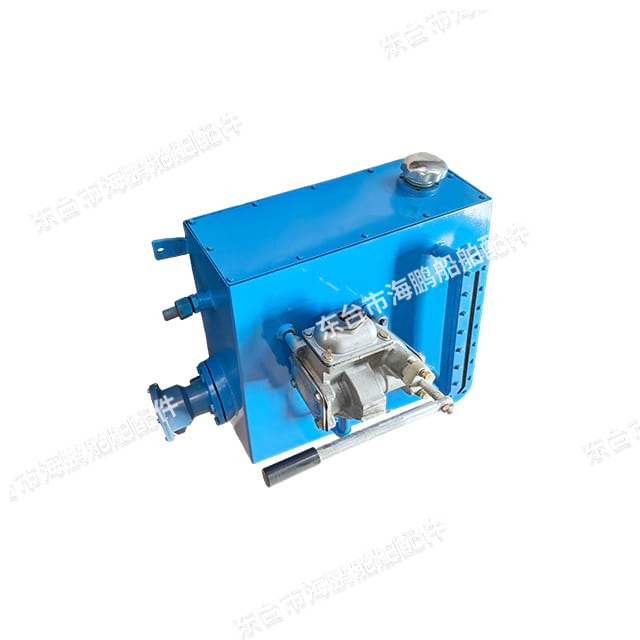
A marine hand pump lubrication oil tank serves specific operational niches. These systems are common on smaller workboats, tugs, and fishing vessels. They act as reliable emergency backup systems on larger ships. They are frequent choices for budget-conscious retrofits where space is limited. They offer high reliability and low mechanical complexity because they have no electrical components. However, they require manual intervention. Crew members must physically pump the oil to maintain pressure or top off the system. They lack automated pressure adjustments, making them unsuitable for primary use on large commercial ships with fluctuating drafts.
Commercial shipping relies on automated gravity and header tank systems. These are standard for large-scale shaft arrangements on tankers, bulk carriers, and container ships. They provide continuous pressure regulation without crew intervention. They integrate seamlessly with UMS protocols and ship-wide alarm systems. They maintain the exact hydrostatic head required automatically by utilizing a dual-tank setup. A lower storage tank pumps oil up to a smaller header tank, which overflows back down, ensuring a constant static head. The primary drawback is a higher initial capital expenditure. Installation complexity also increases, requiring precise piping, pump wiring, and electrical sensor integration.
Specialized vessels often require a custom stern shaft lubrication system. Icebreakers face extreme cold and heavy vibration from milling ice. Deep-draft cargo ships experience massive draft variations between ballast and fully loaded conditions. These scenarios require non-standard tank geometries to fit in cramped aft peak spaces. They often demand dual-tank redundancy to survive single-point failures in remote Arctic waters. Extreme environments necessitate integrated heating coils and heavy-duty insulation. Custom engineering ensures the lubrication system matches the exact hull dynamics and operational profile. It prevents failures where off-the-shelf solutions fall short.
Effective stern shaft lubrication system maintenance extends component life and prevents unexpected drydocking. You establish a strict routine based on running hours. Tank cleaning removes accumulated sludge and heavy particulates that settle at the bottom. Regular oil sampling detects bearing wear metals and water ingress early. Sight-glass replacement ensures accurate visual level checks, as old glass becomes stained and opaque over time. Sensor calibration guarantees alarm reliability during UMS operations. Neglecting these tasks leads to contaminated oil circulating through the stern tube. Contaminated oil accelerates bearing degradation and destroys the elastomer lip seals.
Improper tank placement introduces severe operational risks. Insufficient head pressure leads directly to aft seal failure, allowing seawater to enter the stern tube and contaminate the oil. Engine or shaft misalignment during the shipyard engineering phase exacerbates these issues. If the tank system cannot compensate with adequate oil flow, friction spikes at the bearing contact points. The hydrodynamic film collapses under the uneven load. The resulting heat damages the white metal bearings, leading to a complete shaft seizure. Precise shipyard installation and laser alignment are mandatory to support the lubrication system.
Environmentally acceptable lubricants (EALs) are expensive and chemically sensitive. They are prone to hydrolysis if exposed to water and rapid oxidation if overheated. Proper tank design mitigates oil degradation. Internal baffling prevents oil aeration and foaming as fluid returns from the stern tube. Desiccant breathers stop atmospheric moisture from entering the tank as the oil level fluctuates. Sludge drains allow crews to remove condensation safely from the lowest point of the tank. These design elements protect the chemical integrity of the lubricant and extend the operational life of the EAL, saving thousands in replacement costs.
A reliable marine lubrication equipment manufacturer provides robust engineering support long before the purchase order is signed. Assess their ability to deliver precise hydrostatic calculations based on your vessel's general arrangement drawings. Request 3D CAD models for engine room integration to avoid piping clashes. Ensure they offer support for existing stern tube seals and understand various bearing arrangements. A vendor who only sells metal boxes is insufficient for complex marine engineering. You need an engineering partner who understands shaft dynamics, hull deflection, and fluid mechanics.
Documentation carries as much weight as the hardware itself. Ensure the manufacturer provides comprehensive material traceability for every component. You receive mill test reports (MTRs) for all steel plates and piping used in construction. Verify they supply type approval certificates from recognized classification societies. Classification surveyors demand this paperwork during new build commissioning and special surveys. Missing documentation halts vessel commissioning and delays dry-dock departures, costing shipowners massive daily penalties.
Evaluate the vendor's supply chain reliability and aftermarket service. Critical spare parts must be available immediately. Sight glasses, level switches, and breather caps break during routine operations. You need replacements fast to maintain class compliance. Assess their global service network and dispatch capabilities. Dry-docking often occurs far from the vessel's home port, in yards across Asia, Europe, or the Americas. The manufacturer must provide technical support and spare parts worldwide. Delays in receiving a replacement tank or sensor cost thousands in daily downtime and lost charter revenue.
The optimal stern tube oil tank balances precise hydrostatic pressure requirements with robust material construction. It provides absolute bearing protection capabilities and maintains strict class compliance. Base your final decision on the vessel's draft variations, the viscosity of the required EAL or mineral oil, and the level of automation required by the ship's operational profile.
Take the following actions to secure the right system:
Compile your vessel's exact stern tube volume and maximum draft specifications from the general arrangement drawings.
Identify the specific class society requirements and required certifications for your vessel type and operating region.
Determine the viscosity, pour point, and chemical compatibility of your chosen stern tube lubricant.
Request detailed technical drawings, 3D models, and hydrostatic calculations from shortlisted manufacturers.
Verify the vendor's global support network and spare parts availability before issuing the final purchase order.
A: Engineers often use these terms interchangeably, but they serve different functions. A header tank specifically maintains a constant static head pressure on the stern tube seals. It is usually smaller and positioned at a precise height. A gravity tank stores the bulk oil and relies on gravity to supply the header tank or feed the system directly. Large vessels use both to ensure continuous, regulated pressure.
A: Marine stern tube oils have exceptionally high viscosity. They are formulated thick to maintain a protective hydrodynamic film under heavy shaft loads. Cold engine room temperatures make them even thicker, causing them to resist flow. Proper tank design mitigates this issue. Look for tanks with wider fill ports and sloped bottoms. In cold climates, specify tanks with integrated heating elements to improve flow rates.
A: The JT/T 365 is a specific Chinese maritime industry standard dictating the manufacturing requirements for marine oil tanks. It covers structural integrity, minimum volume calculations, welding standards, and pressure testing protocols. Compliance ensures the tank withstands heavy marine vibrations and maintains a secure barrier against oil leaks and water ingress. Shipyards use this standard to guarantee baseline quality for commercial vessel installations.
A: You prevent water ingress through precise hydrostatic balance. The oil pressure in the header tank must be slightly higher than the external seawater pressure pushing against the aft seal. This positive internal pressure pushes outward, keeping seawater out of the stern tube. Simultaneously, the pressure must not be so high that it damages the forward seal located inside the engine room.
A: Perform visual inspections daily to check oil levels and sight glass clarity. Test low-level alarms monthly to ensure UMS compliance. Drain condensation and sludge from the bottom valve weekly or as dictated by the vessel's planned maintenance system. Conduct comprehensive oil sampling quarterly to check for water content, oxidation, and bearing wear metals. Regular maintenance prevents catastrophic seal and bearing failures.
A: Hand pumps are common on commercial vessels, but only for specific secondary tasks. Crews use them for topping off the main tanks or as emergency manual backups during power failures. Commercial vessels require automated or gravity-fed systems for their primary operation. Continuous, automated flow is necessary for constant bearing protection, pressure regulation, and unmanned machinery space compliance.
A: The tank itself cannot fix a misaligned shaft. However, an improperly aligned engine or shaft increases localized friction and heat on the stern tube bearings. This makes the continuous, optimal flow of oil from a properly sized tank absolutely necessary. The steady oil flow dissipates the excess heat caused by the misalignment, preventing the white metal bearings from wiping and seizing the shaft.


