

Views: 151 Author: Site Editor Publish Time: 2026-09-24 Origin: Site


Rudder system integrity stands as a critical operational safeguard for any modern vessel. A compromised seal causes more than just minor flooding inside the steering gear room. It triggers accelerated shaft corrosion, catastrophic steering failure, and unscheduled, high-cost dry-docking. Upgrading or replacing a sealing unit requires operators to carefully balance upfront installation expenses against long-term mechanical reliability. Fleet managers cannot afford poor equipment choices when operating in highly corrosive marine environments. Selecting the correct architecture demands an objective evaluation of vessel operating conditions, bearing alignment tolerances, and material compatibility. By understanding these factors, you ensure regulatory compliance while maximizing the longevity of the entire steering mechanism. We will explore how to evaluate different architectures, manage retrofitting risks, and implement preventative maintenance protocols. You will learn practical methods to protect your investments and keep vessels operational.
Systemic Approach: A rudder stock sealing device must be evaluated as part of the broader marine rudder system, acting in tandem with the upper and lower rudder bearings.
Material Selection is Critical: Elastomeric lip seals and mechanical face seals offer distinct advantages depending on draft depth, vibration tolerances, and maintenance budgets.
Corrosion Mitigation: Modern sealing solutions must integrate seamlessly with shaft grounding or Impressed Current Cathodic Protection (ICCP) systems to prevent galvanic corrosion.
Proactive Lifecycle Management: Routine diagnostic checks prevent catastrophic failures, shifting maintenance from reactive emergency repairs to predictable operational expenses.
Ignoring early signs of water intrusion leads to severe financial consequences. A small leak might seem manageable initially. However, continuous saltwater ingress demands constant bilge pumping. This drains operational resources and burdens the crew. When a catastrophic failure occurs, vessels require emergency dry-docking. Emergency repairs carry premium labor rates. You also face massive revenue losses from off-hire time. Cargo can become compromised if flooding breaches aft compartments. Financial margins vanish quickly under these conditions.
Component interdependence dictates how failures spread. A localized leak never remains localized for long. A failing unit acts as a catalyst for widespread mechanical wear across the marine rudder system. Water carries abrasive particulates into sensitive areas. These particulates grind against metallic surfaces. They accelerate the degradation of the lower rudder bearing. Once this component wears down, shaft alignment shifts. This misalignment transfers uneven friction upward. It severely damages the upper rudder bearing. You must view these components as a singular, unified mechanism.
Compliance bodies enforce strict rules regarding steering gear enclosures. Classification societies like DNV and ABS mandate specific watertight tolerances. Inspectors routinely check the steering gear room during surveys. If they discover active leaks or unapproved modifications, your vessel fails the inspection. Non-compliance immediately threatens your operational license. Furthermore, insurance providers require strict adherence to class rules. If a steering failure causes an accident, investigators will review your maintenance logs. They will invalidate insurance claims if they find neglected leaks or non-compliant equipment.
Failure Stage |
Mechanical Consequence |
Financial & Operational Impact |
|---|---|---|
Minor Seepage |
Micro-abrasion on shaft surfaces. |
Increased crew labor for bilge pumping. Minor part replacement costs. |
Moderate Ingress |
Particulate contamination in lower bearings. |
High lubricant consumption. Potential environmental fines (VGP). |
Severe Flooding |
Complete loss of hydrodynamic lubrication. |
Emergency dry-docking. Extensive off-hire revenue loss. |
Structural Misalignment |
Upper bearing friction and steering gear failure. |
Risk of insurance invalidation. Complete drivetrain overhaul required. |
Choosing the right technology requires evaluating your specific operational needs. Different architectures offer distinct benefits and drawbacks. Engineers categorize these technologies into three primary groups. You must understand their mechanics before making procurement decisions.
Compression packing represents the oldest approach to shaft sealing. Mechanics wrap braided packing material around the shaft inside a gland. They tighten a follower nut to compress the packing. This compression creates a physical barrier against water.
Pros: This method carries a very low initial cost. It utilizes traditional technology recognized by every marine mechanic. Crews can perform field repairs easily without specialized tools.
Cons: Stuffing boxes require continuous physical adjustment. The design intentionally relies on micro-leaks for cooling purposes. The compressed braided material creates high friction. This friction causes the highest risk of shaft scoring over time.
Elastomeric lip systems utilize synthetic rubber profiles. These rubber lips press firmly against the rotating shaft. They maintain tension using internal garter springs. Engineers often stack multiple lips to handle different pressure zones.
Pros: They adapt excellently to varying hydrostatic pressures. The housings maintain a highly compact footprint. Manufacturers often supply modular, split-seal options. A split rudder stock seal allows for much easier replacement during servicing.
Cons: Elastomers remain susceptible to physical damage. Marine growth, barnacles, or floating debris can slice the rubber lips. These systems also require highly precise lubrication management to prevent dry-running.
Mechanical face architectures represent the premium tier of marine engineering. They utilize two highly polished rings. One ring rotates alongside the shaft. The other ring remains stationary inside the housing. Heavy-duty springs press these two flat faces together.
Pros: They deliver near-zero leakage. The spring mechanism easily handles high shaft vibration. Once installed correctly, they boast an exceptionally long mean time between failures (MTBF).
Cons: They demand the highest upfront capital expenditure. The installation process is complex. It requires extremely strict alignment tolerances. Any structural misalignment will crack the brittle face rings.
Seal Category |
Initial Cost |
Maintenance Frequency |
Leakage Tolerance |
Vibration Resistance |
|---|---|---|---|---|
Compression Packing |
Low |
High (Constant adjustment) |
Intentional micro-leaks |
Low |
Lip Seal Systems |
Moderate |
Medium (Routine lubrication) |
Minimal |
Moderate |
Mechanical Face Seals |
High |
Low (Long MTBF) |
Near-zero |
High |
Procurement teams often struggle to compare competing brands. A poorly matched component degrades rapidly. You must evaluate several core criteria before finalizing your purchase order. Follow these structured evaluation steps.
Vessel Operating Profile: Match the technology to your primary environment. Deep-water vessels face high hydrostatic pressures. They benefit from heavy-duty face assemblies. Shallow or sandy waters present different challenges. Abrasive sand particles destroy elastomers quickly. River-going vessels often require specialized particulate deflectors.
Galvanic Corrosion Resistance: Assess the housing material carefully. Bronze, composite, and stainless steel react differently underwater. Saltwater acts as an aggressive electrolyte. Dissimilar metals create a battery effect, causing rapid electrolysis. You must integrate your chosen rudder stock sealing device with external grounding networks. Connecting them to an Impressed Current Cathodic Protection (ICCP) system prevents galvanic corrosion.
Dimensional Compatibility: Never assume standard sizes fit perfectly. Verify your shaft diameter tolerances rigorously. Measure the radial play limits while the vessel sits in dry-dock. Ensure complete dimensional compatibility with your existing bearing setups. A mismatch of even a few millimeters causes immediate catastrophic failure.
Supplier Authoritativeness: Evaluate manufacturers based on verifiable engineering credentials. Demand to see Class Society type approvals upfront. Verify their global service network availability. If your vessel breaks down in Singapore, you need local parts access. Scrutinize their transparent testing data. Avoid brands pushing "zero-maintenance" marketing traps. Every mechanical component requires some level of maintenance.
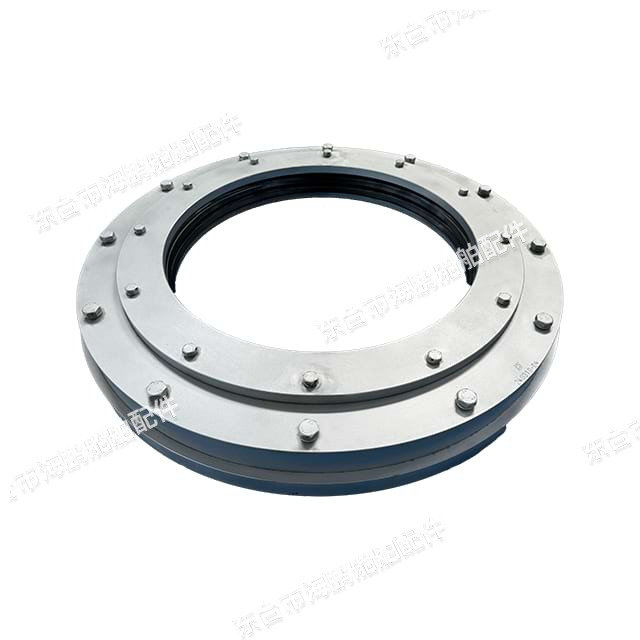
Procuring the right hardware only solves half the problem. Installation introduces significant operational risks. Retrofitting older vessels presents unique engineering challenges. Mechanics must prepare the environment carefully before bolting on new hardware.
Alignment risks ruin many retrofit projects. Preexisting wear on the shaft surface guarantees trouble. Years of friction often leave deep scoring or pitting. If you install a brand-new elastomeric lip over a pitted shaft, it will fail instantly. The sharp metal edges slice the rubber during the first rotation. Mechanics must evaluate the shaft condition meticulously. They often need to machine the shaft surface smooth prior to installation. Sometimes, they must install a stainless steel sleeve over the worn area.
Installation logistics dictate your dry-dock schedule. Solid designs require massive labor hours. Crews must unship the entire rudder assembly to slide a solid ring onto the shaft. This process consumes days of heavy lifting and expensive crane rentals. Split-type designs offer a distinct operational advantage. Manufacturers split the housing and sealing elements into halves. Mechanics assemble these halves directly around the shaft in situ. This innovation saves countless days of dry-dock labor.
The DIY sealant trap catches many inexperienced operators. Internet forums often spread dangerous misconceptions. Users sometimes recommend slathering marine sealant over a degraded mechanical unit. They treat it as a primary fix. Clarify this immediately: relying on marine sealants is a severe safety hazard. It is not a viable temporary repair. Sealants cannot withstand dynamic shaft rotation or high hydrostatic pressure. The water pressure will eventually blow out the temporary fix. This causes sudden, massive flooding.
Failing to measure shaft runout before tightening housing bolts.
Installing elastomeric lips over unpolished or scored metal surfaces.
Overtightening packing glands, causing extreme thermal buildup.
Ignoring the manufacturer's specific torque sequencing guidelines.
Proactive maintenance extends hardware lifespan significantly. It shifts your budget from reactive emergency repairs to predictable operational expenses. Crews must adopt rigorous inspection habits. You cannot ignore the steering gear room between annual surveys.
Establish a standardized inspection framework for the engineering crew. Create a baseline checklist for weekly walk-throughs. Crews must check the bilge water origin regularly. If water accumulates near the steering gear, investigate immediately. Monitor grease and oil consumption rates closely. A sudden spike in lubricant consumption indicates a breached barrier. The crew should log these metrics digitally to track long-term trends.
Lubrication realities dictate environmental compliance. You must differentiate between water-lubricated, grease-lubricated, and oil-lubricated systems. Water-lubricated designs use ambient seawater to reduce friction. Grease systems require manual or automated grease injections. Oil-lubricated setups provide excellent friction reduction but carry high regulatory risks. The Vessel General Permit (VGP) strictly regulates oil discharges. Even minor oil leaks into the surrounding ocean trigger massive environmental fines. Operators increasingly switch to environmentally acceptable lubricants (EALs) to mitigate this risk.
Vibration analysis serves as an exceptional diagnostic tool. Recommend periodic monitoring of shaft vibration frequencies. Crews can use handheld sensors or mount permanent accelerometers. High vibration serves as an early warning indicator. It highlights underlying bearing degradation before it ruins the watertight barrier. When vibration spikes, schedule an inspection immediately.
Keep the steering gear room exceptionally clean to spot new leaks instantly.
Purge old grease periodically to remove trapped abrasive particulates.
Verify ICCP system voltage outputs weekly to ensure active corrosion defense.
Train junior engineers on the specific failure signs of your chosen architecture.
The right rudder stock sealing device protects the entire steering drivetrain. It acts as the primary defense line against corrosive seawater. Choosing wisely prevents cascading mechanical failures across your bearing network. A systemic approach guarantees better performance and compliance.
Decision-makers should immediately audit their current system’s failure frequency. Review your maintenance logs from the past three years. Consult with certified marine engineers for a system-wide tolerance check. Never commit to a specific architecture without measuring your exact structural dimensions.
Do not wait for a catastrophic flood to upgrade your equipment. Request a technical consultation from an approved manufacturer today. Download a compatibility sizing guide to begin your evaluation process. Protecting your vessel starts with securing its most vulnerable entry points.
A: Replacement schedules focus on running hours and class inspection cycles. Most vessels replace them every five years during standard dry-docking. However, environmental factors like heavy sand abrasion or severe vibration may shorten this lifespan significantly. Always consult the manufacturer's specific MTBF guidelines.
A: Yes, you can do this if you utilize a split-seal design. Split designs come in halves. Mechanics bolt them together directly around the shaft. This bypasses the physical constraints of unshipping heavy steering assemblies. It remains a major evaluation factor for buyers seeking reduced labor costs.
A: Premature corrosion typically stems from stray electrical currents in the water. A lack of proper shaft grounding accelerates this process. Incompatible dissimilar metals interacting within the saltwater environment also create aggressive galvanic corrosion. Integrating an ICCP system prevents this degradation.
A: A failing barrier allows abrasive particulates to enter the system. This debris severely scores the bearing surfaces. It also causes the loss of critical hydrodynamic lubrication. This compounds the failure, leading to structural misalignment and destructive friction throughout the entire steering mechanism.


