
English 
T: +86-156-0511-1716
E: hp018@hpcbkj.com
E: hp018@hpcbkj.com
In Fangong Industrial Park, Dongtai Town, Dongtai City


| Quantity: | |
|---|---|


Stainless Steel Sleeves are precision-engineered cylindrical components designed for rotating shafts in marine and industrial equipment, available in two core types: Oil-Sealed and Water-Sealed. They act as a protective barrier between shafts and seals, preventing leakage and extending shaft life. Key selling points include:
Exceptional corrosion resistance (304/316L stainless steel) for oil, water, and chemical media.
High wear resistance (surface hardness up to HRC 50 via heat treatment).
Customizable dimensions to fit shafts of all sizes (10mm–500mm).
Dual-purpose design (oil/water sealing) for versatile application across equipment.
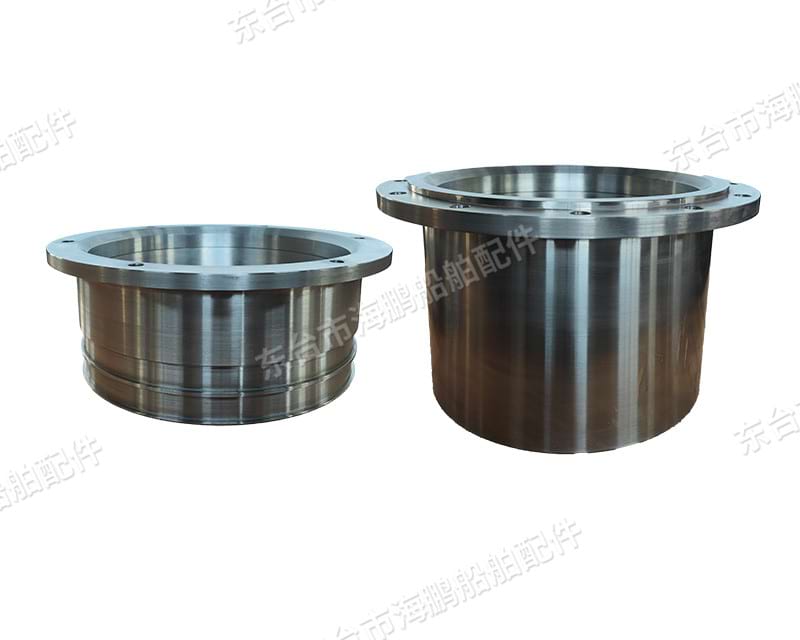
Corrosion Resistance: 316L stainless steel resists pitting from saltwater and chemical oxidation from lubricating oils, ensuring a 5–8 year service life.
Precision Fit: Machined with H7 tolerance for the inner diameter, ensuring no looseness with shafts and optimal seal contact.
Wear-Resistant Surface: Heat-treated and polished surface reduces friction between the sleeve and seal, minimizing seal wear by 40%.
Water-Sealed Drainage Design: Water-sealed models include spiral drainage grooves to channel excess water away from the seal, preventing accumulation and leakage.
Marine Propulsion Systems: Water-sealed sleeves protect the propeller shaft from seawater intrusion, ensuring the stern tube seal remains effective (critical for preventing hull flooding).
Automotive Engines: Oil-sealed sleeves seal crankshafts/camshafts, preventing engine oil leakage and maintaining oil pressure for smooth operation.
Water Treatment Pumps: Water-sealed sleeves with anti-fouling coatings resist clogging from silt and algae, ensuring consistent pump performance in wastewater plants.
Industrial Gearboxes: Oil-sealed sleeves prevent gear oil leakage, reducing maintenance costs and avoiding equipment damage from oil loss.
Oil-Sealed Sleeves: Create a dynamic seal via oil seal lips that attach to the sleeve’s polished surface. As the shaft rotates, the sleeve rotates with it, and the seal lip retains lubricating oil while blocking external dust/debris.
Water-Sealed Sleeves: Use mechanical seals (or O-rings) to form a tight barrier against water. Spiral drainage grooves on the sleeve’s outer surface guide water away from the seal, preventing pressure buildup and leakage.
Stainless Steel Grades:
304: Cost-effective for dry or mild wet environments (e.g., inland engine shafts).
316L: Contains molybdenum for enhanced saltwater corrosion resistance (ideal for marine use).
904L: Ultra-corrosion-resistant for harsh media (e.g., chemical wastewater).
Manufacturing Steps:
Cold drawing of stainless steel bars to ensure uniform diameter.
CNC turning for precision ID/OD machining (tolerance ±0.01mm).
Heat treatment (quenching + tempering) to increase surface hardness.
Polishing (Ra ≤ 0.8μm) to optimize seal contact and reduce friction.
Quality inspection (dimensional measurement, corrosion testing).
Customization: Offers non-standard sizes (e.g., tapered sleeves, stepped IDs) and surface coatings (e.g., PTFE for chemical resistance).
Installation Support: Provides shaft-sleeve fitment guidelines (interference fit recommendations) and seal compatibility charts.
Testing & Certification: Supplies material test reports (MTRs) and ISO 9001-certified production records.
After-Sales: 24/7 technical consultation for leakage troubleshooting, with replacement sleeves shipped within 48 hours for urgent cases.


